
Plantar fasciitis is one of the most common causes of heel pain, especially for people who spend long hours on their feet, walk on hard surfaces, or experience tightness in the calves and arches. While rest, stretching, and supportive footwear can help in the early stages, chronic heel pain often requires a more targeted approach. Shockwave therapy has become a well-regarded, non-invasive option for stubborn cases that don’t respond to basic care.
At Rebound Clinics DMV, we use shockwave therapy as part of a comprehensive treatment plan designed to support healing, reduce pain, and help patients return to normal activities with greater comfort.
Why Plantar Fasciitis Becomes Stubborn
Plantar fasciitis usually develops gradually as the thick band of tissue along the bottom of the foot becomes irritated. Over time, this tissue loses flexibility and becomes more sensitive to load. People often describe sharp pain with their first steps in the morning or after sitting for a long time. For others, the pain grows worse with prolonged standing, walking, or working on hard floors.
Because the plantar fascia is stressed with every step, it can be difficult for the tissue to heal on its own. Even when symptoms improve, discomfort often returns once activity increases again.
How Shockwave Therapy May Help
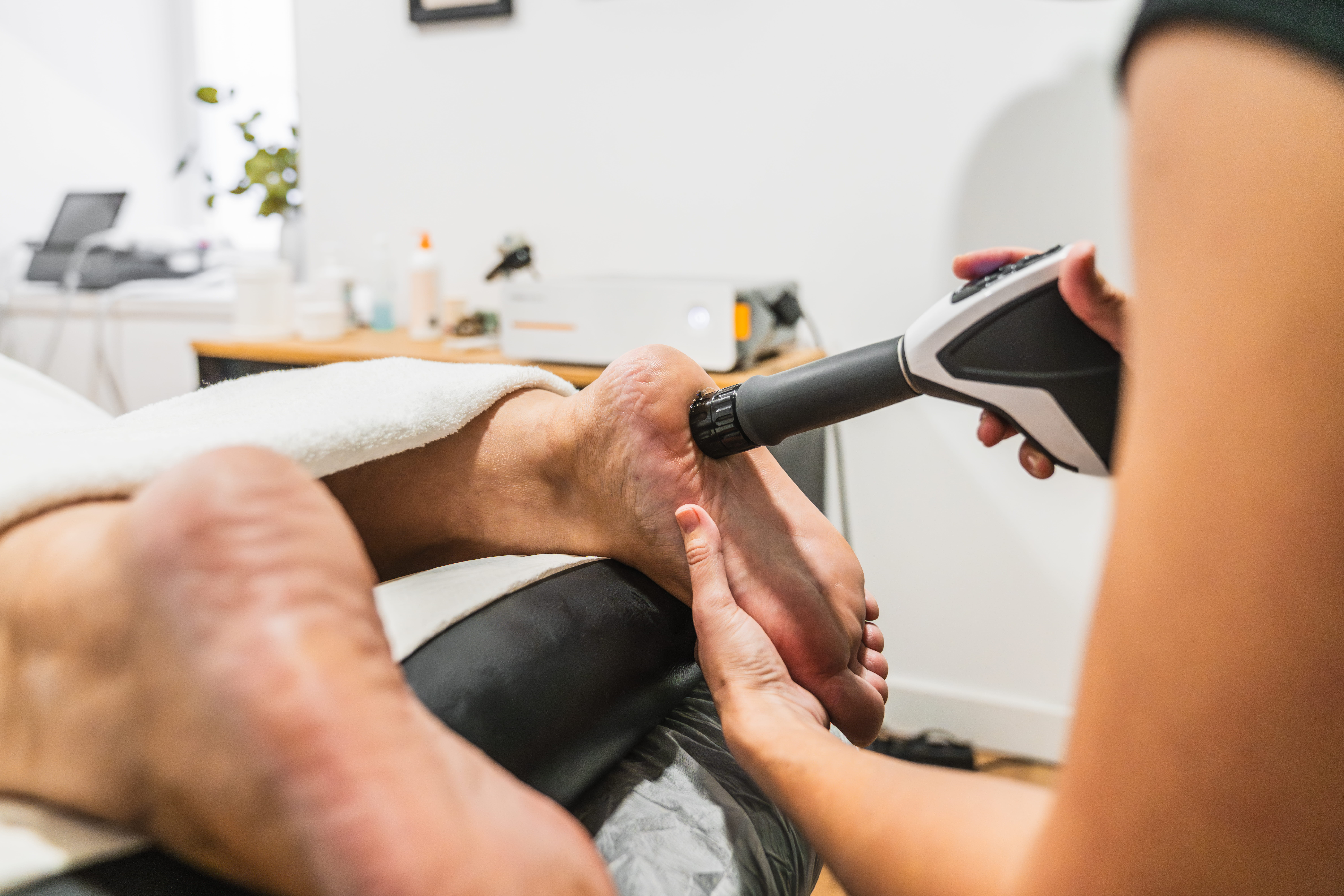
Shockwave therapy delivers focused acoustic waves to the heel and arch to stimulate a controlled healing response. As the tissue receives mechanical stimulation, circulation may improve and nerve sensitivity may decrease. This combination can help the plantar fascia become more resilient over time.
Sessions are typically quick and do not require anesthesia or downtime. Many patients appreciate that the treatment allows them to continue working and staying active while supporting long-term recovery.
What a Treatment Session Feels Like
A shockwave therapy session for plantar fasciitis usually lasts about ten to fifteen minutes. Your provider will apply a small amount of gel to the heel and arch, then use a handheld device that delivers gentle pulses to the affected area. The sensation can range from mild tapping to moderate pressure, depending on sensitivity. The intensity is adjustable, allowing us to tailor the experience to your comfort.
Some people feel temporary soreness later in the day, but it typically resolves within 24 to 48 hours. You can usually resume normal activities immediately after treatment.
How Many Sessions Are Needed
The number of sessions varies based on your symptoms and how long the pain has been present. Many patients complete a series of weekly treatments and begin noticing changes gradually as their tissue responds. Consistent care and proper loading strategies often contribute to better outcomes.
Your provider may recommend specific stretching or strengthening exercises to complement the treatment. This helps reinforce foot stability and reduce the chances of the pain returning.
Who Is a Good Candidate for Shockwave Therapy
Shockwave therapy may be an option if you have heel pain that has lasted several weeks or months, especially if it has not improved with rest, stretching, footwear changes, or basic conservative care. Patients who spend long hours standing or walking for work often find the treatment helpful because it addresses both the irritation and the tissue quality itself.
It may not be recommended for individuals with open wounds in the area, certain circulatory conditions, or specific medical contraindications. A thorough evaluation ensures the treatment is appropriate.
Combining Shockwave Therapy with a Complete Plan
While shockwave therapy can be valuable on its own, it tends to work best as part of a well-rounded program. At Rebound Clinics DMV, we commonly combine it with chiropractic care, therapeutic exercise, mobility training, and guidance on daily habits that may contribute to heel irritation. This integrated approach allows us to address both the source of pain and the factors that keep it coming back.
Final Thoughts
Plantar fasciitis can be frustrating, especially when it disrupts your routine, limits your activity, or affects your workday. Shockwave therapy offers a promising, non-invasive option for people who haven’t found relief through traditional methods. With the right plan and professional guidance, many patients experience significant improvements in comfort and mobility.
If heel pain is holding you back, our team at Rebound Clinics DMV can help you determine whether shockwave therapy is a good next step.
Contact Us
To schedule a consultation and learn more about shockwave therapy for plantar fasciitis, contact your nearest Rebound Clinics DMV location.
